
Stable Diffusion: How Open Weights Changed Generative AI
Stable Diffusion was not the best text-to-image model in 2022. It was the first one anyone could run at home.
In April 2022, OpenAI released DALL-E 2, a text-to-image system that produced startlingly realistic images from natural language descriptions. Access was by waitlist. Google released Imagen the same month, but only for researchers. Midjourney launched as an invite-only Discord bot. The quality was astonishing; the access was tightly controlled. Then, in August 2022, Stability AI released Stable Diffusion with open weights. You could download the model and run it on your own GPU. Everything changed.
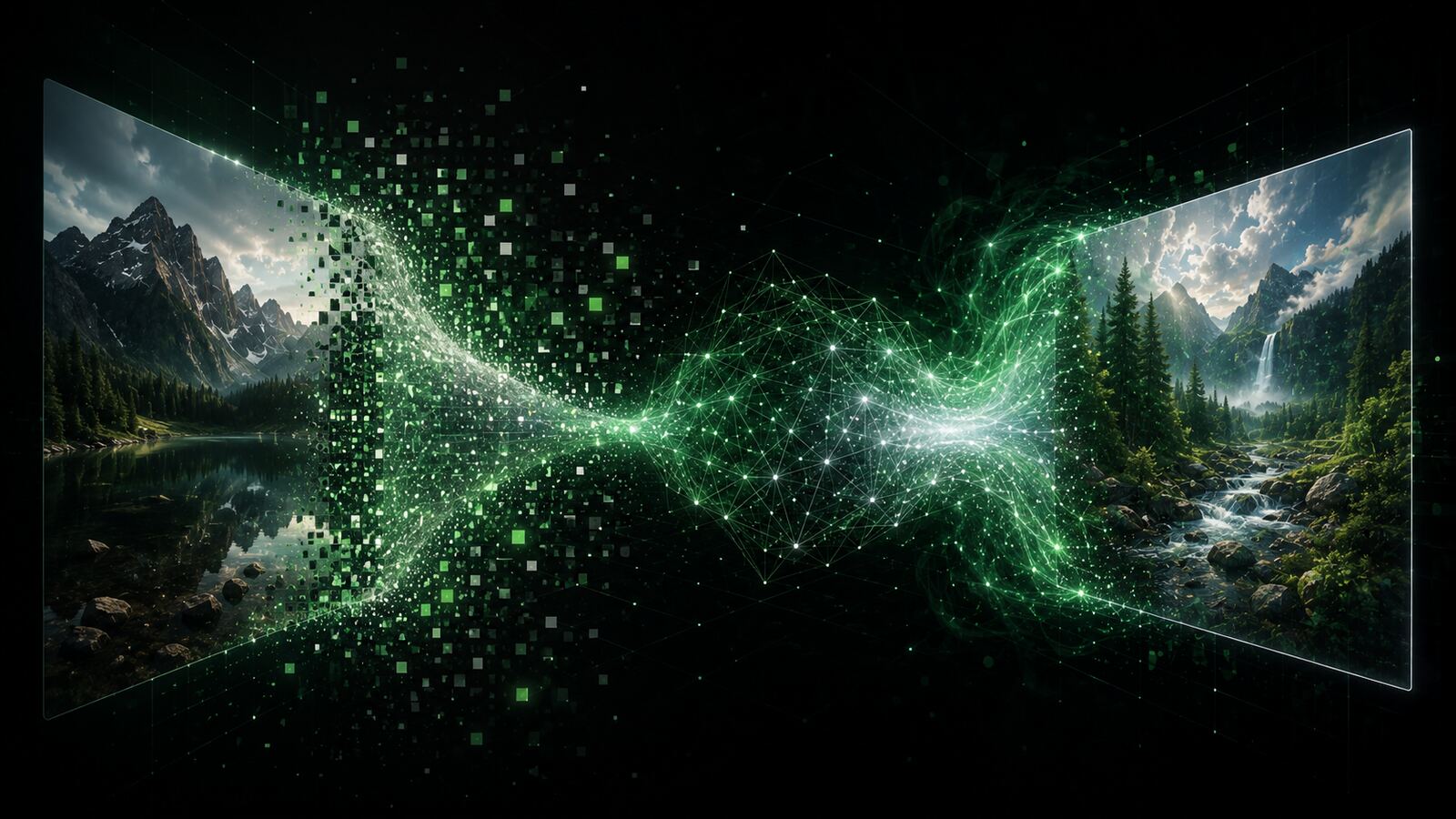
The architecture was latent diffusion, developed by Robin Rombach, Andreas Blattmann, and colleagues at Ludwig Maximilian University of Munich. Instead of applying diffusion directly in pixel space (adding and removing noise at full image resolution), latent diffusion compressed the image into a lower-dimensional latent representation, applied diffusion there, then decoded back to pixels. This made generation dramatically cheaper and faster without significant quality loss. The key insight was doing the hard work in a small space, not a large one.
The open weights enabled an ecosystem that no closed model could match. Within weeks, researchers had built ControlNet (adding spatial control to generation), DreamBooth (personalising models to a specific subject from 3–5 images), and LoRA (fine-tuning models on consumer hardware with minimal compute). The model was running on RTX 3090s, Apple M1 chips, and eventually in-browser. The community shipped more innovations in six months than the original team had produced in years.
The release triggered a legal and ethical reckoning. Artists whose work had been in the training data objected to their style being reproducible without credit or compensation. Getty Images sued Stability AI in January 2023. A group of artists filed a class action. The question of what "training on" someone's work means legally, and whether generating an image in someone's style constitutes infringement, had no clear answer in 2022. It still does not.
By 2024, latent diffusion had become the dominant architecture for image generation. Stable Diffusion XL, SDXL-Turbo, and FLUX.1 extended the original line. Text-to-video systems like Sora extended the same principles to temporal sequences. The model trained on images collected without explicit permission became the foundation of a multi-billion-dollar industry and one of the most contested legal questions in intellectual property law. Rombach's paper had been a PhD thesis chapter. It became the basis for nearly every image generator in use today.
What it actually meant
Stable Diffusion's real contribution was not image quality: Midjourney produced better images. Its contribution was openness. By releasing weights publicly, Stability AI created an ecosystem of fine-tuned models, LoRA adapters, ControlNet extensions, and custom workflows that no closed system could match. Open weights enabled specialisation at a scale that the original developers could not have anticipated.
What enterprises get wrong today
Enterprises block image generation tools entirely, citing copyright risk, and miss the actual use cases: synthetic data generation, product visualisation, design prototyping, and training data augmentation. The copyright question is real but narrow: it applies to specific use cases, not to the technology category. Blanket bans prevent legitimate applications while the underlying risk remains theoretical.
Related capabilities
More from Models
Ask about this story
Stable Diffusion was not the best image model in 2022, Midjourney arguably was. But it had open weights, which meant anyone could run it, fine-tune it, and extend it. What would you like to explore: the architecture, the legal battles, or the open-source ecosystem it created?