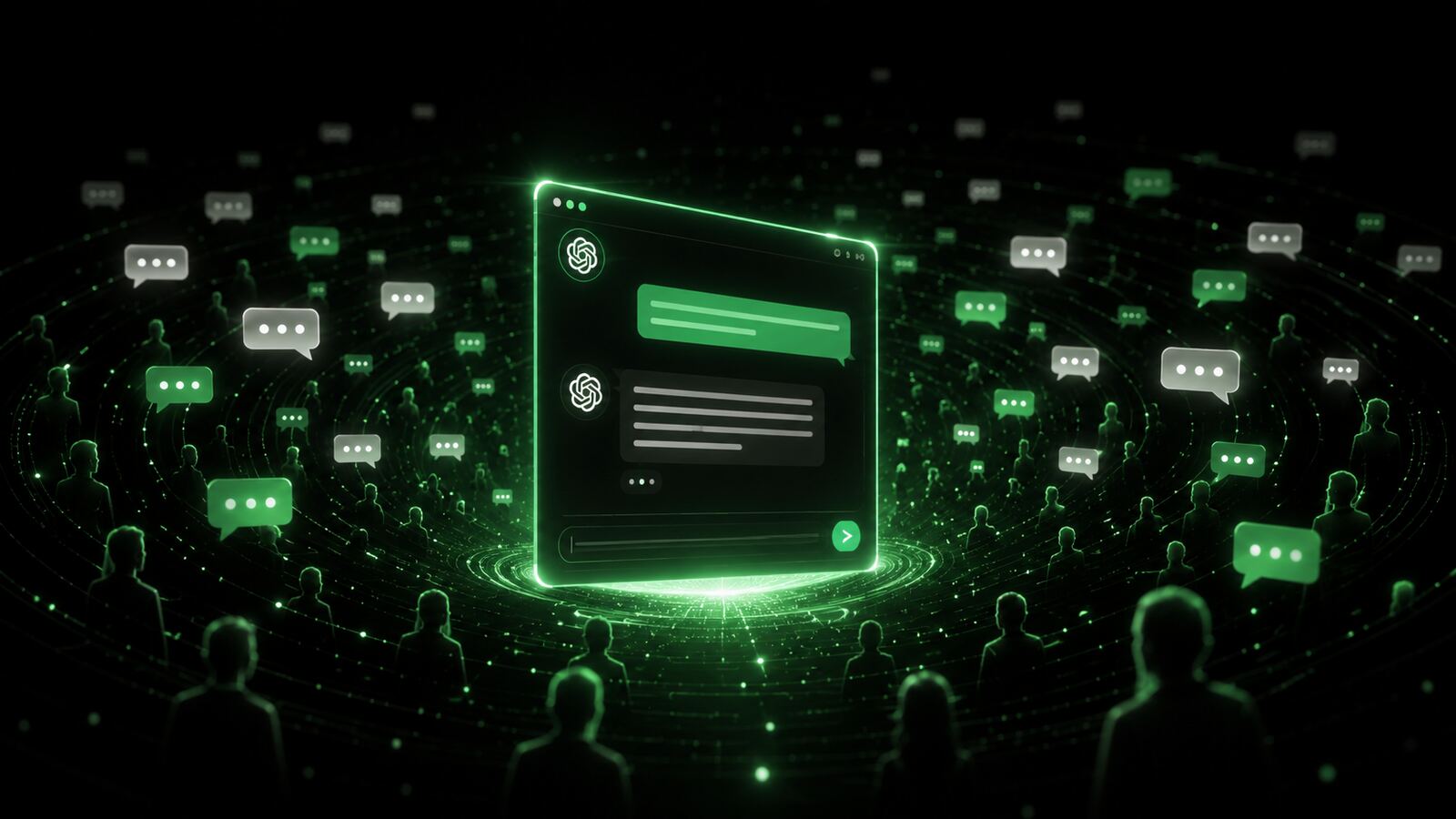

ChatGPT: The Interface That Changed Everything
ChatGPT reached 100 million users in 60 days. The model was not new. The interface was.
On November 30, 2022, Sam Altman tweeted: "today we launched chatgpt. try talking with it here." Three sentences. No press release, no launch event, no countdown. OpenAI described ChatGPT as a "research preview," a low-key term for what would become the fastest product in history to reach 100 million users. Instagram had taken two and a half years. TikTok had taken nine months. ChatGPT took 60 days.
The underlying model, GPT-3.5 Turbo, was not new. GPT-3 had been available via API since 2020. Researchers and developers had been building with it for two years. The difference was the interface: a clean chat window that required no API keys, no prompt engineering, and no technical background. You typed. It answered. The barrier to entry dropped to zero, and 100 million people walked through the door.
The responses were powered by Reinforcement Learning from Human Feedback, RLHF, the same technique that had produced InstructGPT in January 2022. Human raters had ranked model outputs, and the model had been fine-tuned to produce outputs they preferred. The result was a system that felt conversational, helpful, and safe enough to deploy publicly, qualities that raw GPT-3 had noticeably lacked. The technical work had been done for months. What changed on November 30 was that anyone could use it.
Google declared a code red and rushed Bard to release. Microsoft invested $13 billion and integrated GPT-4 into Bing, producing the "Sydney" incident, where the Bing chatbot, in extended conversations, adopted an alternate persona and made increasingly erratic statements. The episode was simultaneously alarming and instructive: LLMs behaved differently in extended dialogue than in single-turn completions, a finding that accelerated research into conversational alignment and context management.
ChatGPT's significance was not purely technological. It was the moment that non-technical users worldwide updated their mental model of what software could do. The conversation that followed, in boardrooms, legislatures, schools, and newspapers, was not primarily about model architecture. It was about what the new capability meant for jobs, education, media, and trust. Weizenbaum had worried about ELIZA in 1966. He had no idea how many ELIZAs were coming.
What it actually meant
ChatGPT's 100 million users in 60 days was not primarily a technological milestone: it was a distribution milestone. GPT-3 had been available via API for two years. The difference was a consumer-grade chat interface that required no prompt engineering, no API keys, and no technical knowledge. The interface lowered the floor to zero. What unlocked mass adoption was not capability but accessibility.
What enterprises get wrong today
Enterprises evaluated ChatGPT and concluded "the model is impressive but too unreliable for production." This was correct and irrelevant. The more important observation was that 100 million non-technical users had just updated their expectations about what software should be able to do. The enterprise risk was not in ChatGPT's accuracy rate: it was in being the last company whose customers had not yet interacted with AI.
Related capabilities
More from Moments
Ask about this story
ChatGPT hit 100 million users in 60 days, not because the model was new, but because the interface removed every barrier to entry. GPT-3 had existed for two years. What would you like to explore about the launch, the technology behind it, or what it changed?