
PageRank: When Link Structure Became a Markov Chain
PageRank treated the web as a Markov chain, and the math that ranked websites is now the backbone of Google's $2 trillion empire.
In 1998, Larry Page and Sergey Brin were PhD students at Stanford, working on a project originally called "BackRub," a web crawler that indexed the backlinks pointing to each page. Their insight was that not all links are equal. A link from The New York Times is more valuable than a link from a personal blog. But how do you measure the value of a page without circular reasoning? The value of a page depends on who links to it, and the value of those linkers depends on who links to them?
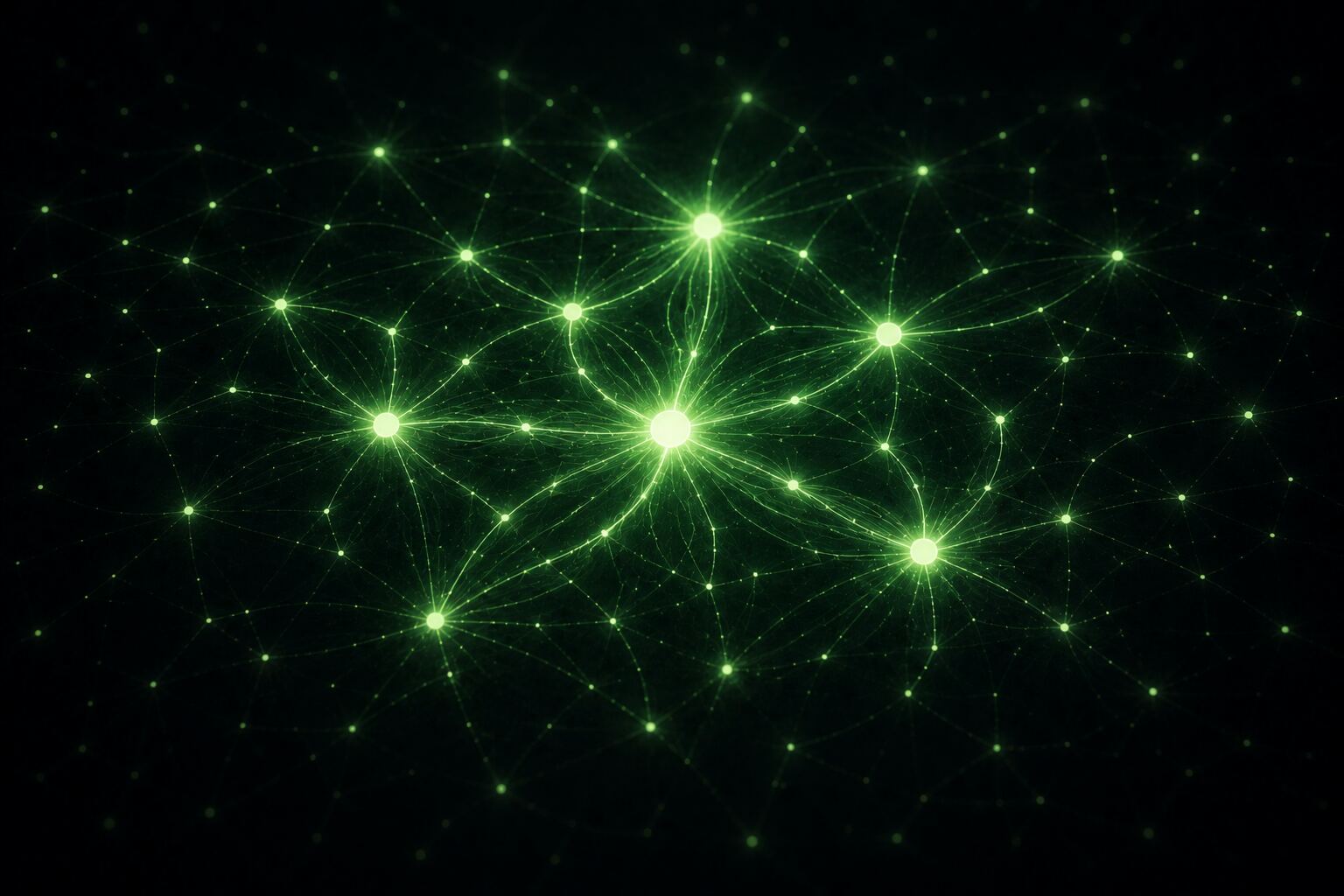
The solution was PageRank, named for Larry Page, which treated the web as a Markov chain. Imagine a random web surfer who clicks links at random, occasionally teleporting to a random page. The fraction of time the surfer spends on any given page, in the long run, is that page's PageRank. This can be computed as the dominant eigenvector of a massive transition matrix. Pages with many high-quality inbound links have high PageRank because high-quality surfers spend time there.
Brin and Page applied for a patent in 1998 and launched Google that year as a Stanford research project. The algorithm's mathematical elegance translated directly into search quality. Google's results were visibly better than competitors like AltaVista and Yahoo, which ranked pages primarily by keyword frequency. Within two years, Google was the dominant search engine. The PageRank patent was licensed to Google by Stanford, which received 1.8 million Google shares in return, eventually worth over $300 million.
PageRank is rarely the sole ranking signal in modern Google Search, as hundreds of signals now combine in deeply non-linear ways. But its conceptual legacy runs deep: link-based signals, graph-based ranking, and the idea that web structure encodes trustworthiness shaped a generation of information retrieval research. The Markov chain formulation that Andrei Markov developed to analyse Russian poetry in 1906 found its way into the algorithm that indexed the world's information 92 years later.
What it actually meant
PageRank worked because it encoded the right structural assumption: trustworthiness is transitive on the web. A page linked by trustworthy pages is trustworthy. The math is only as good as the assumption, and the assumption happened to be approximately correct. Algorithms succeed or fail on the quality of their embedded assumptions.
What enterprises get wrong today
Enterprise knowledge graphs and recommendation systems are built without clear assumptions about what the link or similarity structure encodes. "We will connect things that are related" but related how? By co-occurrence? By domain? By user behaviour? Different relational structures encode different notions of relevance. Building a graph without deciding what the edges mean produces retrieval systems that return noisy results.
Related capabilities
More from Algorithms
Ask about this story
PageRank treated the web as a Markov chain: each page's rank is how often a random surfer would land there. The math Markov invented for Russian poetry ended up powering the $2 trillion search empire. What would you like to explore?